__largepreview__.webp)
Faith IRL - Real Faith Stands - James 1:2–18
Welcome to South Sub Church. We are so glad that you've decided to worship with us today. Whether you're in the room right now or watching from home, wherever it is, we're just so glad that we get to spend this time together and worship the Lord together as one. Here at South Sub Church, we believe we are one church with two expressions of worship, but we have one mission to bring people to Jesus Christ and together become passionate followers of him. Another way that we worship is through our ti offerings. And here at South Church, we believe that we give the Lord back what he gives us. And there's a couple ways that I want to invite you to do that this morning. One is giving online at southub.urch/give. Another way is by texting the number that's on the screen right now. Or there's an envelope in your seat back pocket. And here's what I want to invite you to do. No matter what gift you give, big or small, we believe that whatever we give, the Lord multiplies that and we are able to be the hands and feet of Jesus here where we are right now. If you're new, we invite you to fill out a connect card. We would love to get to know you, pray for you, and find a way for you to get more connected with our church. And if you're watching us online, make sure you leave a comment wherever you are. Maybe you're going to the mountains, maybe you have a soccer game to go to. Whatever it is, we're just so glad that you've decided to join us for worship. You picked a great week to be here. Let's jump into God's word together. Let's worship him today.
Heat up here.
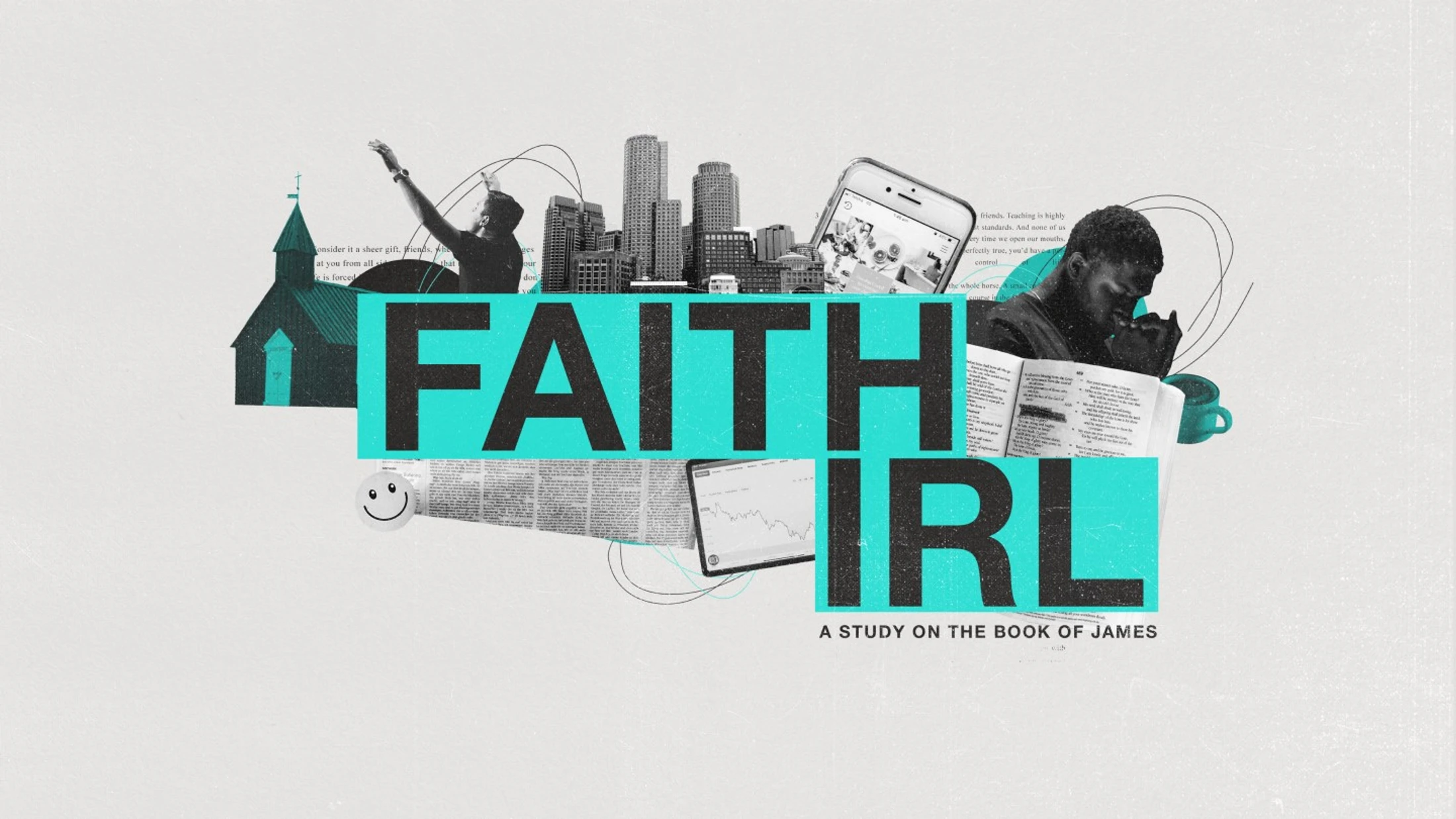
Well, good morning and happy belated New Year's. Okay, just out of curiosity, how many of you made New Year's resolutions, but you've already messed up those New Year's resolutions? Little confession. Confession is good for the soul. You know, I was reading this past week that 37% of people who make New Year's resolutions, it's about finances. Okay? It's about doing a better budget. It's about not spending so much money at Starbucks. But 37% of all New Year's resolutions is about finances. You know what that tells me? that as a whole, our society, finances kind of give us stress. Anybody feel that way a little bit? Yeah. Don't leave me all alone, church. Did anybody feel that way a little bit? Finances give us whether you're stressed because you have too much or you're stressed because you have too little. Finances give us stress. And here's what I want you to know as we begin 2026 here at South Sub Church. We want to join you not in that stress and not putting pressure on you to make those New Year's resolutions happen, but to help us all be healthier when it comes to finances. And so we actually have two opportunities coming up that I want to make you aware of even before we get in the message today. And the first one is this. We're going to be offering Financial Peace University. It's a 10-week course and we'll offer it on Wednesday night starting January 28th. If you've never taken this course, it is amazing. Um, you know, so many of us know how to budget. We just never get around to budgeting. Or if we make the budget, we never keep that budget. And so it helps you with budgeting. It helps your future thinking about your finances. It just gets the same kind of like-minded people going, "Help us." And you come together. But that starts January 28th, and that's going to be on Wednesday nights. It runs for 10 weeks. The course is actually about $100. We use a an outside curriculum that we use to teach it. But you know what? Here's what we'll do this year because we believe at South Suburch and helping us become healthier in all areas of our life. Here's what I'm going to do. If you take that course, we will wave that $100 and make it free to you if you finish the course. If five weeks into it, you give up, we might talk about negotiating on what you owe back there, but we just want to make sure just the church is more about just you giving. It is the church giving back, too. So, if you're interested in that, you can check online or check out in the lobby and we'll have things about that. The other thing we have coming up, and this is not until January, I'm sorry, February 22nd, but we are partnering with a an organization, a ministry called Philanthrop. And here's what they do. They come alongside individuals at churches and help them with estate planning, not financial planning, not budgeting, but just end of life estate planning. And um the church is paying for this service and it's free to you. And so just go ahead and put on there February 22nd, save the date, and you'll hear more about that. But here's what I want you to hear as you begin your new year. South Sub Church wants to do all that we can to help you to be as spiritually healthy as you can. And wouldn't you agree that finances are part of our spiritual health and we want to partner with you. So there you go. That's my paid advertisement. I took a full three minutes to do that. I get to subtract that from my sermon time. So are you ready for the sermon now? Um here's what we're going to do this week. Um or for the next eight weeks. We're actually going to start a brand new series called Faith in Real Life. We're going to be studying the book of James. And the book of James is so interesting. It it just it it's one person said this. It's the gospel in overalls. Instead of just saying, "Here's what it seems to know what you need to know about following Jesus. Here's what the book of James does." It says, "Let me show you how what it looks like to follow Jesus." I thought about this when I think of being real. number of years ago when when we were raising our two kids and they were in elementary school, one of the staples our family when it comes to eating was meat, vegetables, and cereal. Okay. Um but the problem was cereal was so expensive and we were trying to do our budget and I realized I'm going I don't know if we can keep up with the number of boxes it takes to feed my kids that this is going to become a staple of our family. I mean, Captain Crunch was expensive. And so here's what I had this grand plan. I bought a couple of the clear like cereal um containers and for a couple of weeks I put all the cereal in there and the kids just already you know you look there's Captain Crunch there's tricks there's Lucky Charms and they would pick it and then when the Captain Crunch ran out I went to B Walmart and bought the off-brand. I knew if I bought the off-brand and just stuck the packaging up they're like no way that's not real cereal dad we're not going to eat that. And so I knew I had to kind of gradually transition them so I could trick them into what the real thing was. Do you know how many bowls of cereal they ate of the off-brand Captain Crunch? One bite. One bite. And they're like, "Dad, this is not the real stuff. My plan did not work." Now, we laugh about that, right? But what happens when what's real is not real? What we want to be authentic, but it's not really authentic. And it has to do something with more than just breakfast cereal. I don't know if you watched this news this past weekend. There were some gas stations that didn't get the real unleted fuel. Did you see that article that somehow they mixed up the big gas um trucks that brought the gas there? They had diesel and they put the diesel in the unled. And I don't know how that works. All I know is it didn't work. And so they thought they had real unleted, but they didn't. and how far did the cars go down the road? And so a lot of times when it comes to our life, when we try to substitute what's real with something that's not real, it may look real, it may smell real, it may even appear real, but it's not truly really authentic. When we substitute and we try to use that, it doesn't get us down the road very far. And when James set out to write, we call it the book of James, it's actually a letter. It's a letter that this guy named James, who was the halfb brotherther of Jesus, when he set out to write this letter to Christians 2,000 years ago, but to us today, here's what he's saying. Let me show you what real faith looks like. You see, here's what I'm afraid of. In our Christian societies, we have now leaned more towards behavior modification than truly internal transformation. That we look the part, we act the part, we smell the part. But I think there's so many people that will be sitting in churches today and there's not truly been an internal transformation of Jesus Christ and the Holy Spirit. They're just looking like Christians and it's not real faith. They lean on more ritual than they do relationship. And so here's what James did when he set out 2,000 years ago to write this letter. He's setting out to say, "Hey folks, let me show you and describe for you and point out to you what real faith is." And one of the reasons I believe as I go back and study this passage or this scripture and why why did you even think you would need to write that letter? James was in a very unique season. He was in a season in the church. The church had just started. He was one of the kind of the founding forefathers of the church. But the church had become dispersed and spread out because there's large persecution going on. And I think James could look across the the the country there going, "Okay, here's the deal. We had this great tight community, this great tight church that you read about in Acts and everybody came together and their faith was real and they were showing it." But sometimes when that tightness of community gets dispersed, our faith becomes watered down by the influences around us. Now I just described the church then, but it sounds like it may be the church today. Like we can come together on a Sunday morning and sing sing kumbaya to one another and sing these worship songs, but we go out on Monday and we're so dispersed in the world. I sometimes wonder, are we in the same situation, the same predicament as Christians 2,000 years ago found themselves. And so I really believe as we begin this 8week study of the book of James, it's as fitting for us today as it was for them 2,000 years ago. It is an opportunity for us to take our faith and evaluate it by the kind of the marks, the ideas that James sets forth going, am I really living a real faith? Here's my warning for you as we begin this series. It's going to be challenging and scary for some because when Paul or when James sets out and he gives us these ideas of what real faith looks like, here's what I need to let you know, church. He was not negotiating with us what it should look like. He was writing from authority. You see, he was one of the founding church forefathers. And the church at that point when it was just beginning looked to him and the truth that he was giving was inspired by the Holy Spirit. That's the reason we said it's a letter by James that we now call a book in the Bible. It gives us great authority. It's not suggestions on what our faith should look like. It is declarations on what our faith should look like. And you may say, "Well, that was 2,000 years ago, right, Keith? Like today, hasn't things changed?" Life has changed, but the declarations of what faith looks like has not changed. And so, for some of us, as we study the book of James together, it's going to make us uncomfortable. We're going to recognize that maybe what we call our faith may be behavior modification. Now, you won't hear me stand up here going, "And you are, and you are, but you're not. You're not." But James is going to draw some conclusions and really make every one of us look in the mirror and say, "God, what do you see when you see me?" But here's the good news. When we look in the mirror of God, it is not about condemnation. It is about clarification. that God is not wanting us as we read the book of James and study it together looking and going, "Oh, I just feel bad. I I can't even do God. I can't do church." He's going, "No, be clarified so you can look like me." So, welcome to James in real life. Faith in real life. As you leave today, we've done this several times because we're studying through a book in the Bible. A lot of us um don't want to carry around the full Bible with ourselves and just carry it around with us. As you leave today, you can actually grab a copy of the book of James. We're selling for $5 out there if you want to make a donation for more to pay for somebody else's. Or if you if you have no money, just pick one up. But grab just the book, the book of James. Carry it with in your cart. When you hit a right red light, you can read it. Stick it with you. Carry it with you at work. But just a great way for us to get into it. But as we get in today, we're actually just going to start in chapter one. And here's what we're going to discover in chapter one. I'll go ahead and tell you the three things. You're going to write them down. Don't worry about write them down now. But James is going to give us three practices that keep our faith real. The interesting thing about this letter that we're going to find out, he jumps around a lot. He he he talks about this, you know, talk about this. In fact, one theologian said this, the book of James is like the book of Proverbs of the New Testament. Like there's not this one general theme he's chasing down and supports it like the Apostle Paul does a lot of times in his writing. But he's just going to give us these different just pieces of just great wisdom of what faith looks like. And so today, the the wisdom he's going to give us are just three practices that keep faith real. And these three practices are this. Embrace trials, value what lasts, and resist temptation. You're taking notes. We're going to get through those, but let's just read the passage first. It says this in James chapter 1 verse 2 through 4. He says, "Count it all joy, my brothers, when you meet when you meet trials of various kinds, as you know that the testing of your faith produces steadfastness." And he said, "And let steadfastness have its full effect that you may be perfect and complete, lacking nothing." And so the first principle that he gives us or the first practice that he gives us if we want to keep our faith real is that we have to embrace trials. You can write that down. Embrace trials. Did you notice as I read those first few verses, this is what James was saying? He goes, "It's not if you have trials, it's when you have trials. And he also says this about trials in our life. They come in all shapes and sizes. Over the holidays, Denise and I had the opportunity to visit Disney World with our kids and our grandkids. Talking about a trial. Okay, we're walking through the park and the two granddaughters, I have a four-year-old and a one-year-old, they saw and they wanted one of the little electronic bubble machines. So, I want to be the best grandpa ever. So I said, "Absolutely. I'll buy that. If that's what you want, that's what you get." And I'm expecting I'll buy this little cheap bubble machine for like $6. $49.50 later, times two, they each had their present. I better be the best grandpa ever in the whole wide world after that. And so the trial was like me paying for that, right? Like I'm feeling this like I didn't budget for that. But they go around and they're blowing bubbles. Blowing bubbles. We're pushing them in the stroller. You can't see where you're going because they're blowing bubbles that's blowing my face and I'm having this trial and there's a million trillion billion people at Disney World and I'm feeling this trial and all of a sudden another trial came up. The bubbles that go into the $49.50 bubble machine ran out. You cannot explain to a one-year-old the bubbles are done. Okay? And so she's crying. We're pushing. It's a bad day and we paid a whole lot of money to have fun. So, I realized I need to go buy more bubbles. Would you like to know how much bubbles cost? Oh, no you don't. We have a course called Financial Peace University I'm taking starting this week and it says never take your kids to Disney World. But, but here's why I share that story. The trials that my one-year-old granddaughter was facing were completely different than the trials and her grandpa was facing. But if you ask the one-year-old going, "Well, those trials aren't much. They're look at that compared to his. Are they different?" And so we have a tendency when we go through a trial, we do the comparison game. Look at your trial. Your trial is not as bad my as my trial. Your trial is not as bad as my trial. Or maybe I shouldn't even consider my trial because I know my trial is not as Here's the deal. If you're in the shoes going through the trial, it is a trial. And what James is saying is when you go through trials, no matter what shape, what size, or what they are, he says this. It's going to do something to us. And here's what he says it should do to us. That it should bring us to the point that we should count it all joy. Can I confess to you, church, I didn't count it all joy. Okay? I was looking so through the filter of how this trial of no bubbles and too much money to spend for the bubbles and all these people. I was looking how it affected me and I lost my joy. And when James says this that we should count it all joy, he's not talking about okay count it up, tally it up and do it like math work. When he says that we should count it all doub all joy. He's really saying we should intentionally decide how we choose to view something. There could have been another option of the trial we had at Disney World. I wasn't there with them. You see, after we left after a few days, the other grandparents came. So, we both got this opportunity to be with grandkids. But what if Denise, my wife, had gotten sick and she couldn't go? So, therefore, I wouldn't go and I would have never got to spend $49 times two on two bubble machines. Where's the joy? You see, when God gives us trials, and not if, but when he gives us trials, the Bible lets us know this that we should count it and consider it and be glad we're getting it because he's giving us trials in our life to grow us. So many times we think trials are God's way of punishing us. God, why did I do wrong? Why do I have this? They don't have this trial. He doesn't have this trial. Why do I get this trial? And we get so consumed on how it's affecting us and what we want that we forget what God wants out of it. And the Bible lets us know as James is writing this letter, we need to embrace trials. If we want to practically, if we want to engage in practices that makes our faith real, instead of fussing about our cho our our trials, we should be joyful about our trials because God is allowing them to happen to us to test and produce endurance and maturity in our lives. Let me read for you Romans chapter 3 and 4. And it says this, the apostle Paul writes, "We can rejoice too when we run into problems and trials for we know that they are good for us. They help us to learn to be patient." He said, "And patience develops strength of character in us and helps us trust God more each time we use it until finally our hope and our faith are strong and steady." Here's what I want you to do. Every single person in this room is facing some kind of trial. Put a big smile on your face right now and just say, "Thank you, Jesus." Because he's using it to grow and mature it. He He's using it to help us to embrace these trials. He goes on to say in verse 5 and 8, he goes, "If any of you," this is again James writing the letter to the to to the Christians 2,000 years ago, but to us, he goes, "If any of you lacks wisdom about these trials like God, why why are you giving these trials? If you lack wisdom and you don't understand it, he says, "Let that person ask God who gives generously to all without reproach, and it will be given to him. But let him ask in faith with no doubting. For the one who doubts is like a wave, a wave of the sea that is driven and tossed by the wind. For that person must not be supposed that he will receive anything from the Lord. For he is a double-minded, unstable in his ways." Can I just summarize this for you? He's going, "If you're going through a trial and you want to ask God why, it's okay. Asking God, trying to understand what God is doing is okay." Here's the problem we make when we ask God questions about the trials we're going through. Most of the time, we ask God, "God, why are you doing this to me?" That's not the question that he's talking about with wisdom. Don't ask that question. Here's the question you should be asking God. He'll give you the answer. God, what are you doing with this? You see the difference? Sometimes, too many times, we ask the question, God, why are you doing this to me? Rather than asking the question, God, what are you trying to do through me with this? That's the question we can ask God. That's the wisdom we can ask God. And if you ask with faith going, "Okay, God, I don't get it." Okay, it's even okay to say, "God, I don't even agree with a trial." That's okay because that's our real emotions. But when you say, "God, I don't get it. I don't even agree with it." But what are you trying to do in and through me with this trial, the Bible says he will give us great wisdom and he will show us what he's trying to do with it. And so if we want to engage in practices according to James that really proves and makes our faith real, not something inauthentic, not something that we're just on the outside, not the inside, but the real faith. The first thing we need to do is embrace our trial. Here's the second thing. If you're writing it down that James says, value what lasts. See, there's a lot of things in our life that we value, right? I I value sitting on my couch at night and binge watching Netflix. I I value going and hoping and and and praying that the Broncos win a Super Bowl. Notice I said Broncos and not that other team. So, I'm coming down the road. I'm with you, church. Okay. There's a lot of things we value, but unfortunately, most of our value we place on things that don't last. And when we value on things that don't last, it takes our faith and makes it more about behavior modification than actual internal change. Fact, let me read to you what James says there starting in verse 9. He says, "Let the lowly brother boast in his exaltation and is and the rich one in his humiliation because like a flower of the grass, he will pass away. For the sun rises with its scorching heat and withers the grass, its flowers falls and its beauty perishes. But also will the rich man fade away in the midst of his pursuits. Blessed is the man who remains steadfast under trial. For when he has stood the test, he will receive the crown of life which God has promised to those who love him. Do me a favor. Take your hand like this and just make this noise and make this motion with me. Okay? You know what you just did? Like, dude, it just went over my head. Keith, you read that, but I have no idea what was going on there. Let me explain what what the context of what was going on when James was writing this. There was really two sides, two sects of the church. There was those that had money and those that didn't have money. And it was creating a lot of conflict and tension within the Christian community. And one of the reasons that it was creating such conflict and and problems within the community is because status was attributed on a person's financial means. And so those that had money, they would walk into the gathering. They would walk in into what we would call the church and they'd be kind of puffed up and they would try to take the best seat and they would sit up there and people would kind of, hey, sit here, sit sit here, sit here because they were at such high status. But those that came in and didn't have money, they weren't given any special treatment. In fact, sometimes they weren't even given much treatment at all because they just didn't carry that type of status. And at the same time with the status as in our world today, a lot of security was based on do you have money or not have money. And so within the church, it almost created this division within the church because those with money would walk in and they're like, "Oh, we're high and mighty and we're all this and give us the best seat and we were all taken care of." And those that didn't have money to walk in one, we don't have much going on. And you can see the tension and conflict instead of like embracing one another. But here's what Paul or what James was saying. He said, "You rich folks, you're placing value on something that won't last. When you die, you're not taking a single possession or single bit of money to heaven with you. But you poor folk, you're also worrying about temporary status. You're worrying about what you don't have. And even what you don't have is not going to last." He's going, "So, here's the deal. both of you together. If you want your faith to be real, if you want to practice it and really make it come alive, you've got to do this, you've got to place value on what lasts. And money, whether you have it or don't have it, is not eternal. We won't get to heaven one day going, "Hey, Jesus, I get a big mansion here cuz I had a shack down there." We don't get to heaven one day going, "Hey, Jesus, I get a threetory because I had a threetory in on earth and I deserve a threetory up here." None of that matters. In fact, in this particular situation, James is talking about money. But what are other temporary things that we put our our our faith in? We put it in our health. We put it in our career. We often, listen to this, we often put our value on our comfort.
We often put our value on our control. So, it's not only health, it's not only finances, it's not only your position at your work. Those are all temporary. But the control that I fight for and the comfort of my life that I demand, they are also temporary. And what James is writing to us, he's saying this one, here's what you've got to do. You've got to place your value, place your emphasis of your life. You got a value on things that last.
Can I tell you what happens in the mind of a preacher right now? I'm like, dude, that's good. Okay, write that down. That's good. Like, that'll preach, right? But here's the deal. It may preach good on Sunday, but how does it live out on Monday? Right? It's really easy to take notes going, "Preach on, preach on, but how does it look in our life on Monday?" What does it look like to value things that last on Monday? We can just run down here. Here's some ways that we make sure that we value things that last. Let obedience matter more than outcomes. You do what God says is right, even when it doesn't immediately fix the situation or make life easier. Let obedience matter more than outcomes. Here's another one for you. How does it look on Monday? Hold money as a tool, not as a security blanket. You still work, you still budget, you still plan. All of those are important, right? But your peace doesn't rise and fall with your bank balance. So, we look at money as a tool, not a security blanket. Here's a third one for you. Respond to loss or disappointment without losing hope. Grief is real, but it doesn't erase joy because your identity isn't tied to what has been taken. So, respond to loss or disappointment without losing hope. Let me just give you two more. Make decisions based on character, not on convenience. You choose honesty, humility, and love even when shortcuts would be faster and would be easier. The last one, pray first instead of panicking first. Your instincts shift from how do I fix this to Lord, help me to trust you in this. those five things there, that's just ways that you can begin moving to embracing and to valuing what lasts in life.
I love the way and we read James chapter 1 vers12 at the end of that passage. Let me read to you the message says, "Anyone who meets a testing challenge head on and manages to stick it out is mighty fortunate. For such a person is loyally in love with God, the reward is life and more. That when we value things that last, we think we're losing something because we're not valuing these temporary things, but we're actually gaining a much greater reward reward than the things that we held on to originally. Number three, as we're looking at this passage and James is giving us these these ideas. James has given us these practices that keep our faith real. And the last one, write this down. Resist temptation. Resist temptation. See what was taking place with the people that that James is writing this letter to and and unfortunately I think it's it's the same thing that takes place with us. It's faulty thinking. And here was the faulty thinking that the trials they receive, James already said they're from God. And so people deduct, oh, if the trials are from God, then all my temptations must be from God. Now, there's a big difference between trials and temptations. In fact, the definition for trial is this. An external pressure that tests your faith and reveals what you trust. a trial, external pressure that tests your faith and reveals what you trust. It comes from outside of you and it allows God to grow you and build endurance in you. Now, let me give you the definition of a temptation. A temptation is an internal pull towards sin that targets your desires. One is external, one is internal. So, a temptation, an internal pull towards sin that targets your desires. It comes from within you. And here's what James says. God never causes it. Your life is full of temptations. It's full of trials. God allows the trials to come to grow you, but God never sends the temptations there to grow you. In fact, let me read it for you. James chapter 1 13. It says this, "Let no one, he says, say when he is tempted, I am being tempted by God. For God cannot be tempted with evil, and he himself tempts no one. But each person is tempted when he is lured and enticed by his own desire. Then desire when it has conceived gives birth to sin, and when sin is fully grown, brings forth death." Do not be deceived, my beloved brothers. So here's what James is doing. And he's just giving us a simple and urgent warning because don't be deceived. Like here's why. If I think trials come from God and so God, okay, just bring them on. If you have the wrong thinking, you think temptations come from God. Rather than fleeing that temptation, you step towards that temptation and well God, I'm just going to going to I'm going to kind of stand straddle the line right here. I'm going to get really close. I know you don't want me to sin, but but I'm not going to run from it because if trials are growing me, just like being really close to sin, it must be growing me, too. And James going, "Are you crazy? God didn't send that, so don't get close to it." God sends the trials, but not the temptations. The temptation comes from within you. You see, you're stepping towards that temptation, that line that steps over towards sin, not because I want to grow closer to God. Now, watch this. Because you want to be God. You see, when I move towards sin in my life, here's what I'm saying. We never said it out loud, but this is what's happening. God, I don't trust you to give me me what satisfies me. So, I'm going to go find it myself and try to be satisfied. So, moving closer to temptation is not making us more like God. We're trying to replace God and be God. And James is going, "Don't be deceived."
See, there's no saying that says this. Sin will take you further than you want to go, keep you longer than you want to stay, and cost you more than you want to pay. And I believe this church that we have become a society, a Christian society. Let me just put another the church has become this entity. We don't want to call sin sin. It sounds ugly. We want to be more about love and we want to be more about grace. Hear me. I totally 100% believe in God's love and God's grace. I wouldn't be standing before you today if it wasn't for God's love and grace. But somehow we've stepped away from calling sin sin. Remember I said James gets to call the authority because he's one of the church forefathers. We've taken the authority of calling sin sin and we said each do what is right in his own mind and scripture is clear on what sin is sin.
In fact, listen to this quote. Watered down convictions and sinful lifestyle lead to a passive faith that focuses more on religious traditions than the intimate daily relationship with Jesus.
I believe this that one of the reasons that our faith doesn't expose itself as real faith because we've compromised in the world of sin. The reason we don't have a stronger witness to those around us is because our lifestyle does not reflect Christlikkeness. It consumes us with me likeness and me likeness is sin.
James is going to tell us later as we study the book. He makes this quote in James chapter 4:7. He says, "So humble yourselves before God. Resist the devil and he will flee from you." So, I'm not going to stand up here going, "Okay, this is your sin and this that that's the Holy Spirit to convict your sin." But sometimes I think we don't step away from sin because we feel so defeated by sin. Like, I've tried and I can't stop. I moved and I can't get away from it. And here's what James says. How do you defeat sin in your life? You resist the devil. You step away from it. But he goes, there's a part two. We humble ourselves before God. We move towards God. You see, we're so busy trying to fight Satan that we never get the power from God. One of the tools that we're going to give you in this this season and the series, and you found it in your handout when you came in, it's just a weekly devotion. Okay? And here's what we're going to do. Whatever passage we study on Sunday, we've written daily devotions on that same passage that you can take more time to look at in your own devotional life for the rest of the week until we get here next Sunday. So, I really want to encourage you, grab the the book of James, carry it with you, and grab one of these and stick it in every week and take five minutes every day. That's what it means to humble yourself. That's what it means to move towards God. And when you move towards God, you'll be resisting the devil. When you resist the devil, what are you doing? You're resisting temptation. And so those three things right there will lead us to have a more real faith. Now, we're going to keep on going through James, and there's going to be a whole lot more we're going to learn, but let's lay the foundation. Let's lay the foundation on what it means to have real faith. Now, we're going to sing a song here, but let me close with this. It's hard. If we didn't study anything else in James and we just took those three things right there. What's the first one?
What's the first one? What's the second one? What's the third one? Those three things are difficult. Here's what I believe that God gave us one of the greatest I'm going to call it in key terminology superpowers there is to step towards these you know what that superpower is community we call it connect around here we have our pathway that we say there's certain things that we do as followers of Jesus and and connect is one of them and so we're in this as we begin the new year. All of our groups are kicking back up. That's community. That's people coming around you. I guarantee you, you can't do it alone. And so, let me just encourage you. If you are not in a group, would you take a look at them? There's a QR code I think they're going to put behind me here. You can get more information about in the lobby the next two weeks. We're going to be have just people standing out there telling you about their group. I believe this with all my heart that community is the superpower to help us have real life faith because instead of trying to do it alone, you got people coming around you and supporting you. You got people coming around encouraging. You got people come around sometimes and just holding you. And so as we step towards real life faith, don't step to it alone. Step to it with others. Will you pray with me? Father, thank you for your word. And I'm just amazed this letter 2,000 years old is still so real, so relevant, so so for us today. And God, thank you.
Your word says this, that your word is sharper than a two-edged sword. Um, and it will come in and clear us and clean us and mold us. And so Jesus, we invite you through your word to come. And not just on Sunday, would you come in our devotions? Would you come in our daily reading of your word, God? Come and make us into real life faith. What a faith that so resembles you, Jesus.
And would you lead us into community? Lead us to connect and do with those around us. And we pray this in your name, Jesus. Amen.