__largepreview__.webp)
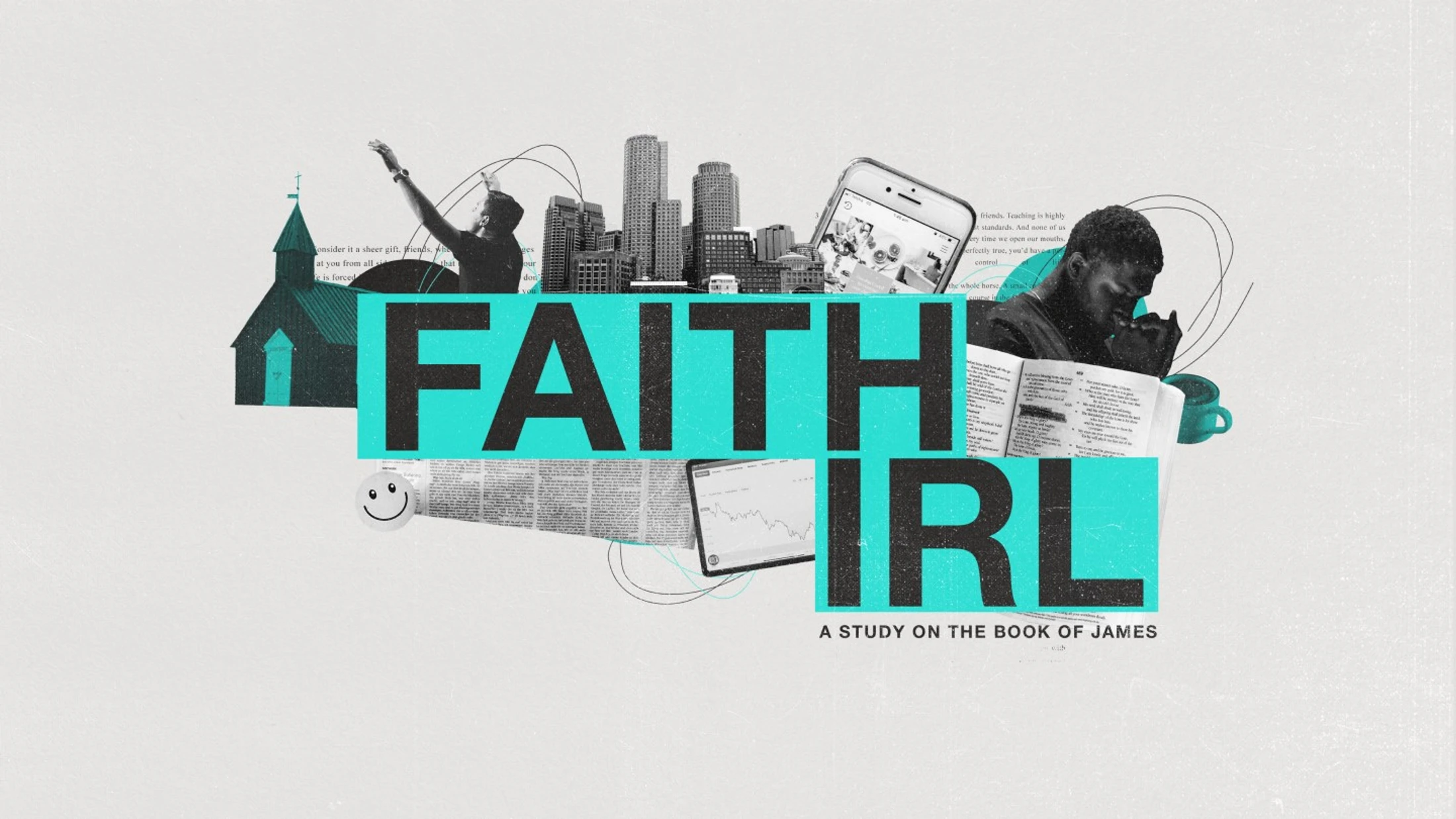
Faith IRL - Real Faith Works - James 2:14–26
Hi and welcome to South Sub Church. We are so glad that you are with us. Whether in person or online, you are all a part of our family. We are one church with two expressions of worship with one mission to bring people to Jesus Christ and together become passionate followers of him. We value living a life of generosity because Jesus was so generous to us. If you'd like to give to the ministry south of Church, it's simple to do online or in person. Your generosity helps us to share Jesus with our community and beyond. If you are new, take a moment and fill out our connect card. We would love to get to know you and pray for you and get you connected. And to all our online visitors, welcome. Just drop us a note in the chat so we know where you're visiting us from. We are so glad you're here and thanks again for worshiping with us this morning.
Heat up here.
Well, good morning. Listen, a long time ago, back in the 1800s, there was a man by the name of Charles Blondon. And Charles Blondon was a was a um worker in the local circuses, and he was a trapeze artist. And so, as the circuses went from town to town, he would walk the trapeze, and people were impressed. But he decided to go out on his own. And so, he took his art of trappies walking and created shows in different towns and would just draw huge crowd just come watching him do that. And so one day he had the great idea that he was going to try something that no one else has ever tried before. So he took his show to Niagara Falls and he stretched a tight rope from one side of the falls all the way to the other. Begin to promoting the local newspapers come watch me walk across this. I'm sure most of the people came thinking they're going to watch him fall into the falls more than walk across the falls. But this huge crowd came and so the day arrived and he took his big trapeze balancing pole and he began walking across that guideline as everybody watched in amazement. He got all the way across, turned around, spun around and walked all the way across and got on the land and everybody was just cheering up a storm. And he's going, "Did you believe I could do it?" And they all chanted, "Yes, we did. Yes, we did." And he said, "Do you think I could do it again?" And they all shed, "Yes, yes, we think you can." and he held up his balancing beam and he said, "Do you think I can do it without this?" And there was kind of a gasp of people, but they had such encouragement, such such affirmation in him, they just started going, "Yes, yes, yes." So he tossed the little balance pole across on on the ground and he began walking across it. And the story says that he gained such confidence at one point he turned and he spun on one foot to the crowd, waved at him, spun all the way back around, finished walking across and came all the way all the way back to the end. So you can imagine the crowd. They're like, "Oh my goodness, this is absolutely amazing." And he said, "Did you think I could do it?" And they all just started shouting, "Yes, yes, yes, yes." And then it paused and he walked behind a curtain and he'd got something. He came out with the wheelbarrow and he said, ' Do you think I could push the wheelbarrow across the guideline and there was this pause amongst the people and he says, "You don't believe in me?" And the story says they just are all of a sudden started just chanting, "Yes, yes, yes, we believe you can do it. We believe you can do it. We believe you can do it." And he stopped the crowd for a second. He said, "Okay, do you really think I can?" And they started chanting again, we believe. We believe. We believe. And then he steilled the crowd. And he said, 'Then who will volunteer to get in the wheelbarrow? And nobody stepped forward. Now we have just several weeks ago began a new series here in the book of James. And the book of James is talking about faith. And when James is writing this letter that we call the book of James, he is trying to explain to both believers 2,000 years ago when he wrote it and believers today, what does real faith look like? And we're going to learn today that real faith is more than just saying you believe. Real faith is actually putting actions into your belief. But as we get to the second half of chapter 2 today, there's a kind of a problem he's having to address that we need to understand before we jump into the actual scripture. And here's the problem. There were a lot of the people that he was writing to that said they believed in Jesus. They nodded their head. They shouted on the sideline, "We believe. We believe. We believe." They knew that their faith in Jesus is all that it took to save them. They completely believe. It did not take any kind of actions and works on their part to save them. So, they bought into the fa the true faith is just a gift from God. But then they started scratching their head and they're like, "Well, you know what? Let's think about this for a second. If all you have to do is believe in Jesus to go to heaven, then there's really no need for the works. Like if I say I believe, isn't that enough? So I can go live my life however I want to, do whatever I want to, talk with whoever I want to live my life in such a way. And so they begin to say there's no need for the works, just the belief. Another way to put it, there's no need to get in the wheelbarrow. Just believe in the guy pushing the wheelbarrow. And so, as we pick up our passage today and James is writing about what real faith is, he's going to let us know that real faith is believing. It comes from the free gift of God. But real faith also believes the works that comes from the belief in God. And I just need to warn you as we jump into it. Some in here today may get a little offended. And here's why. Because as we jump into the scripture, James is really clear going, if you say you have faith, but you don't have works, then you may not have faith at all. And so, there may be some here today as we study this and you're listening, all of a sudden you stop listening to God's word and you start listening to the preacher and you may get offended because you may walk out of here going, "Well, pastor, are you telling me I'm not saved? Are you standing up on the stage and you're judging me and telling me that I really don't know Jesus? And so, as I prepared this week, there was this tension that I felt because I don't want to offend anybody, but here's what I need you to do to make sure you don't get offended by me. Make sure as we're looking at God's word today in James chapter 2 that you're listening to what God's word says and not what this pastor is saying. Because we've already learned that James said this, that God's word is a great mirror that we look into our lives to examine our own lives. God's word is never meant to be a magnifying glass that I get to go look and peek at every little thing in your life and point things out that should or should not be there. God's word is meant to be a mirror that you can look at your own reflection through God's word to see how God sees your life. And so that's my prayer as we jump into this second half of chapter 2 that we will use God's word today to give us clarity on what real faith is. So if you have your Bibles and we'll have it up here on the screen if you didn't bring your Bibles or if you brought the handout and you take notes along with me. There's the scripture in there as well. But we'll be starting today in James chapter 2 verse1 14. And here's what James begins writing in that 14th verse. He said, 'What good is it, my brothers? If someone says he has faith but does not have works, can that faith save him? Translation that you might consider is what I call the wheelbarrow translation. It says this, "What good is it if someone cheers for the tightroppe walker, believes he can push the wheelbarrow across the tightroppe, but won't get in the wheelbarrow? Is that real faith in the tightroppe walker?" You see, here's what we need to understand. And if you're taking notes, here's the first fill in the blank. It says this, "Faith always produces works." Faith always produces works. So it brings us to the question, if faith produces works, what are the works that James is talking about? Are the works that he's referring to? Is it memorizing more verses? Is it attending church more often? Could it possibly be that we need to post more Christian thoughts and verses on social media? Or maybe just the works he's talking about is just knowing more theology when in reality, none of those are the works that James is referring to. They're all good things to have. There are all are marks of our growing relationship with Jesus, but those aren't the works that he's talking about. In fact, as James goes on, he clarifies the works. He says faith must produce works. And he clarifies the works that he's referring to. Let me read verse 15-1 17 to you. James says this. If a brother or sister is poorly clothed and lacking in daily food and one of you says to him, "Hey, go in peace, be warmed, and be filled without giving them the things they need for the body." What good is that? See, so also faith by itself, if it does not have works, is dead. You see, here's what James is saying. Real faith shows up in provisions, not just intentions. Did you get that? Real faith shows up in provisions, not just intentions. In fact, James said this, "Faith that is lived, faith that isn't lived out with intentions, faith that isn't lived out with provisions, is actually dead faith." Notice he used that word dead. He didn't say if you have faith and it really doesn't show up in your life and actions, you have weak faith. He didn't say if you say you have faith but no one can ever see it by the things that you do and how you treat people around you, then it's faith that needs some improvement. He used a very strong word and he used that word intentionally. That kind of faith that if you walk and you meet somebody and they're standing on the street corner and they're cold or you you meet somebody, they have no food or or whatever reason and you look at going, "Hey, nice to meet you. I pray God takes care of you." He goes, "That faith isn't weak. That faith doesn't need improvement." James says that faith is dead. Can you imagine if we're driving home today and as I'm driving home, I leave here a little later than you do and so I see you on the side of the road and it's obvious that the hood of your car is up. So, you've got a broken down car. And I pull over and I walk over and I hand you my cell phone and you take my cell phone. You're going, "Whoa, somebody's got the newest version of the iPhone." And I got the best case. You look at that case and you know that case probably costs more than the cell phone you have in your own pocket. And as you open it up and look at it, it's just this thing of beauty. I'm going here. And you take my cell phone and you try to use it, but there's no charge in it. you would take that cell phone and hand it back to me going, "This is useless. It's dead." And that's exactly what James is saying. Our faith that has no actions behind it. Faith that is only about intentions and not provisions and helping people is like a cell phone that's on the side of the road and your car is broken down, but it's dead as a doorork knob. It won't do you any good whatsoever. And then James goes on to say this. But as I'm talking about this faith and works and you got to have both. He says this in verse 18. But someone will say this. You have faith and I have works. You show me your faith apart from your works and I'll show you my faith by my works. When James writes that, he's using a rhetorical advice. And he's really like he's answering a question that they might already be asking. And he's going, "Here's the deal. You may look at me going, "Hold on, James. is like you think faith and works is good but I really think think work faith is okay without the works and he's going no none of that makes sense whatsoever what he's trying to say is this that our faith and our works are not separable it's not either or it's both and so again he's writing to these people that had this great knowledge of God they had this great knowledge of Jesus they claimed they had faith in Jesus they knew Their salvation came from him dying on the cross, forgiving their sins. They're going, "We love it. We'll take that free gift." But once they took that free gift, they felt like they had no responsibility or response that should come from receiving that great gift. And he's going, "No, no, it's not either or. You don't pick faith or you don't pick works. It's both." And it's faith and works. In fact, if you're writing down notes, you can put this down. Faith alone justifies, but faith that justifies never stays alone. Let that one sink in. It's a little word in there, but once it sinks in, it's a powerful statement. Faith alone justifies. Okay? We can't earn our salvation. Faith alone justifies, but when we have faith that justifies, then that faith never stands alone. And then he goes on in verse 19. He says, "You believe that God is one. You do well. Even the demons believe." And they shudder. So he's going, "Okay, you want to have this argument." And so you stand over here in your argument. You're going, "No, no, I believe. You can't accuse me of not believing." Now, I may not have works, but I believe. And James looks at him and says, "Guys, even the demons of hell believe in God." And he goes, 'They believe in God so much they shudder at his name. So belief alone doesn't do it. In fact, if you're taking notes, write this down. Faith based on information, not transformation, resembles a demon and not a disciple.
Faith based on information without transformation resembles a demon, not a disciple. Because the demons get the information. They've just never had the transformation. The demons grab hold and going, "I know there's a God. I just won't follow and obey God. I know there's a holy being, but I just won't let that holy being resemble who I am in my life. As I was trying to figure out your fill in the blanks, I almost put it this way. Faith based on information, not transformation, is demonic. And I thought about that and I'm going, that's going to stir people up. If you hear me saying that that if you have faith, but you have no actions to prove your faith and you're demonic, you're going, I'll really be offended. And so y'all, I tried to soften it a little bit. I'm not saying you're a demon if you don't have the actions. But I just want you to know you're in the same company as demons because they believe they have the information, but they've never had the transformation. And then James goes on to say this in verse 20. He goes, "Do you want to be shown, you foolish person, that faith apart from works is useless? You know, when we read scripture, you only can read and understand what's written down. You don't have the emotions behind it. I have a sense right now as James is writing this letter, he's getting a little amped up. Like he's thinking about this conversation, the conversations he's heard from these people that are just claiming faith, but they have no works behind their faith. And he's trying to show them. And all of a sudden, he's getting stirred. And he may be getting stirred because because James, the brother, halfbrother of James, very likely was there the day Jesus hung on the cross. and died for their sins. And maybe part of the emotions that are going on inside of him, he's going, "I saw the savior. I saw my brother. I saw Jesus give his life up for us. And all you have is faith and no works." And he's feeling the just the angst of it. He's feeling what what a tragedy it does to the very crucifixion and the resurrection of Jesus. He's going, "It's more than just faith.
In fact, I love the way the New Living Translation, I'm sorry, the Living Bible does this this same verse, verse 20. It says this, "Fool." Like, they're taking the same verse we just read, but putting a little bit more paraphrase. It goes, "Fool, when will you ever learn that believing is useless without doing what God wants you to do?" Faith that does not result in good deeds is not real faith. Simple as that. Do you remember I said in the beginning of this message today, you might get offended because what you might be hearing right now is the preacher looking at you going, "And you're not saved, and you're not saved, and you're not saved, and you're not saved, and you're not saved." And please understand, I would never accuse anybody. It is not my place to determine who's a follower of Christ and who's not a follower of Christ. There are things that take place in our hearts that only God knows.
But James is being really clear saying this one. If you shake your head yes, but your hands and your feet never show it, then it may may not be real faith after all.
And then James goes on and says, "Let me give you a couple examples." And he points out two specific people within scripture that had lives of faith, but more than just faith, they had lives of action. And the first person he points out in this passage is the great patriarch Abraham. He's going, Abraham, when he began his journey with God, the God, the scripture says this, and God looked at Abraham and considered him his friend. And he said Abraham believed in God just in faith. But because of this faith, he took steps and went to a brand new country, started a brand new people. Abraham is the really the first seed of all of Christianity of knowing God. And he goes, it was faith first. He didn't earn it. this great patriarch. But because he had great faith, he had great strides in his life. And then James goes with another example. He goes, here's the second example. Rahab, Abraham's a great patriarch. Abra Rahab was a great prostitute. She was in the whole story of Jericho. If you don't know that story that when when when the Israelites were beginning to take over the promised land, God sent a couple of spies into the city called Jericho. It had great big walls all around it. And so they snuck in and they met this woman named Jer this woman named Rahab in Jericho. And because they were spies, she believed in the very God they were living for. And the Bible lets us know that she hid them and took care of them. And she was really a big part of how the Israelites were able to attack and defeat Jericho. It was her faith in God, not her fear in these two men that led her to do that. But she put her life on the line. If if the guards, the soldiers there in Jericho would have found out that she was harboring and hiding spies from another from another nation, they would have killed her just like that.
But yet she had great faith, but her great faith had great action behind it. And so James is going here, let me just give you a couple examples. I think it's so interesting. He picks them at the opposite end of the spectrum, doesn't he? A great patriarch and a great prostitute. So he's going, it has nothing to do with who where you've come from in life, God's grace takes care of that. But no matter where you've come from, no matter who you are in your previous life, once we receive that faith, then we're all supposed to then have the the actions to go with that faith. And so he gives these these two examples
and then he goes on in verse 26. For as the body apart from the spirit is dead, so also faith apart from the works is dead. in these short 10 11 verses that we've read that that James is talking about faith, what real faith is, three times he says this, if you have faith but no works, three times he goes, it's dead. Somehow if you're writing a letter to somebody and you're trying to get your point across and you use the same word several times, guess what you're trying to accent? And James is just trying to make it clear. Faith without works is dead. In fact, if you're taking notes, here's another way you could write this down. Faith that is declared but not demonstrated is dead.
Faith that is declared but not demonstrated is dead.
Here's what I know. Looking in a mirror can be overwhelming, can't it? Like, have you ever looked the mirror just at your own self? Your physical reflection on, "Woo, I'm not liking what I see." And you're thinking, "I could do it a little something to it, but there's too much to do to do something to it to really make it look better." And so, what do we do? Just don't look in the mirror. As long as I don't look in the mirror, I don't have to worry about what I look like because it's not in front of me. Looking in a spiritual mirror can be daunting. It can be overwhelming. But God never gave us his word for us to look in it as a mirror to make it so daunting that we just turn away. He really did it in his grace. He shows us his word so we can see ourselves as he see ourselves sees ourselves. He really does it in a way that we can examine ourselves to see what's really there. In fact, Paul wrote this in 2 Corinthians chapter 13 verse 5. He said, "Examine yourselves to see whether you are in the faith." And then he goes on to say this, "And test yourselves."
And so, let me close. If you're taking notes, you have these that you can look and take them home and think about them more. But I want to close by giving you seven what I'm going to call test questions. Seven questions that you can use to examine yourself. And I don't really think these are questions that as I read them to you that you can answer right there and you move on to the next one. I think these are just great pondering questions. These are great questions to meditate on this week and going, "God, help me to see myself as you see me." So, here's the first question. Is my faith mostly something I say or is it something I show? If it's really just something I say, then it's more just about belief. If it's something I show, then the works come in with the belief. Here's the second question. When I see someone in need, do I move toward them or do I only offer words? When I see someone in need, in need, do I move toward them or do I only offer words? Now, let me pause here for just a second. I think it's so easy as you think about faith and works and even some of these questions somehow I think many times our mind automatically goes to how I treat a homeless person. Okay, it's just this natural response right now. Don't get me wrong, every one of these can can can apply to how you treat a homeless person, but I think they apply just as much to how you treat the people in your home. They apply just as much the people that you how you treat the people in your extended family, your co-workers. See, a person in need is much different or can be exemp exemplified in many different ways than just on the street corner hold street corner holding up a sign. It can be that person at work that you know is going through a horrible divorce.
It can be the person who walks in door to the church that you have no idea who they are, but they're sitting alone.
It could be a spouse that's just struggling. There's just some really emotional difficulties in their own life. Are you with me? So, here's question number three. If someone examined my life this week, would they find compassion or just conversation?
If you were to review your life this past week or someone looked at it, which would they find? Compassion was actions with it or just conversation? Here's the next one. Is my Christianity more about attending religious things or obeying Jesus in everyday life? See, I think sometimes where we like slip through that one. Well, I came to church. Isn't that action? It is good to gather together. But if gathering together on a Sunday is the only outward action of your faith, then you may just be more about religious things than you really are about being Jesus in your everyday life. Here's the next one. Is my faith producing love and generosity or remaining invisible and comfortable? Is my faith producing love and generosity or is it just remaining invisible and comfortable? I've heard someone say before, "My faith is personal. I hold it inside." Then it's not real faith. According to James, if it's real faith, it will be on the outside. It doesn't mean you have to go around just Jesus bashing everybody. How about Jesus loving everybody? is what it should look like. Here's the next one for you. Do I have faith that simply agrees with truth or faith that actually trusts Jesus enough to act?
Am I an amener or an outdoer?
Is my faith the kind that stands on the sideline cheering on the tightroppe w tight rope walker with the wheelbarrow or is my faith stepping into the wheelbarrow and putting action behind it? Here's another one for you. If following Jesus cost me something, would my faith still show up? If following Jesus cost me something, would my faith still show up? Again, don't misunderstand me, y'all. That that faith is a free gift from God. Jesus gave himself to us freely. We can't earn it. We can't be good enough. We can't work hard enough for it. It is a free gift.
But that free gift should have a just a natural response that comes out of us. See, the question isn't whether you've done enough. The question is, is your faith alive? James isn't calling us to earn our salvation. He's calling us to examine our faith to see if it's real.
Living faith when it comes to action will stumble. I'll be the first to say in here, not perfect. We'll stumble. Living faith will stumble. But living faith should never stay still.
And so come to you today and you're going, Keith, what do I do with this? Like this is a heavy one. Oh yeah, this passage in James that he wrote thousands of years ago has caused more animosity and more angst in people than many, many, many of the other verses in scripture because it just kind of like paints the picture, doesn't it? It kind of calls us on the carpet. And again, as I said in the beginning, this message today in God's word is not as a magnifying glass that we get to look at every wrong thing in every one of our lives. I really think think about this for a second. It is the most gracegiving passage in scripture because James says examine. And so the question is what if you examine and you're like Keith there's no actions in my life. What do you do then? Here's what I would encourage you to do. take one step back and ask God the question, is it real faith, God? Have I just been playing the religious game? Have I just been doing the righteous things, but I've never really trusted and you've never come in and just transformed my life? And so maybe today it's simply saying, God, from this day forward, I trust you completely. from this day forward, here's my life. And here's what happens to some people. They're like, "Well, I'm not sure because I remember when I was 12 years old and I was at my grandma's church and I really believed in Jesus, but I look at my life from 12 years of age to now and I'm not sure there's really action. So, did I really trust him then? Or was it just kind of like childlike faith?" But maybe I didn't. And maybe I didn't. Here's my deal. Nail it down today. I think we're going to get to heaven and some of us get to heaven going, "Hey, here's the day I accepted Jesus." And God's going to go, "Well, it was really this day, but it doesn't matter because you got him." Like, let's not haggle on the when. Let's haggle on the for sureness of it. And so today, you just Jesus, my actions have not shown what I think I believed. So from this day forward, Jesus, I believe and I'm doing. I don't have to do to get what I believe, but because I believe, it's going to overflow me in what I do. Faith and actions. Will you just bow your head with me
first? Is your heads bowed? He's faithful. He brought you here. God brought you here in his faithfulness to love you, to grace you, to remind you that his free gift of salvation is just that. It's free.
and holy God because of that good great graceful great gift of salvation.
We want to live for you. We want to be more than talk and we don't want to live for show. We just want to live to be your hands and feet for the world to see who you are.
So Jesus today we believe and we walk out of here and we want to do for you in Jesus name I pray. Amen.