__largepreview__.webp)
Gratitude - A Grateful Heart Is a Generous Heart
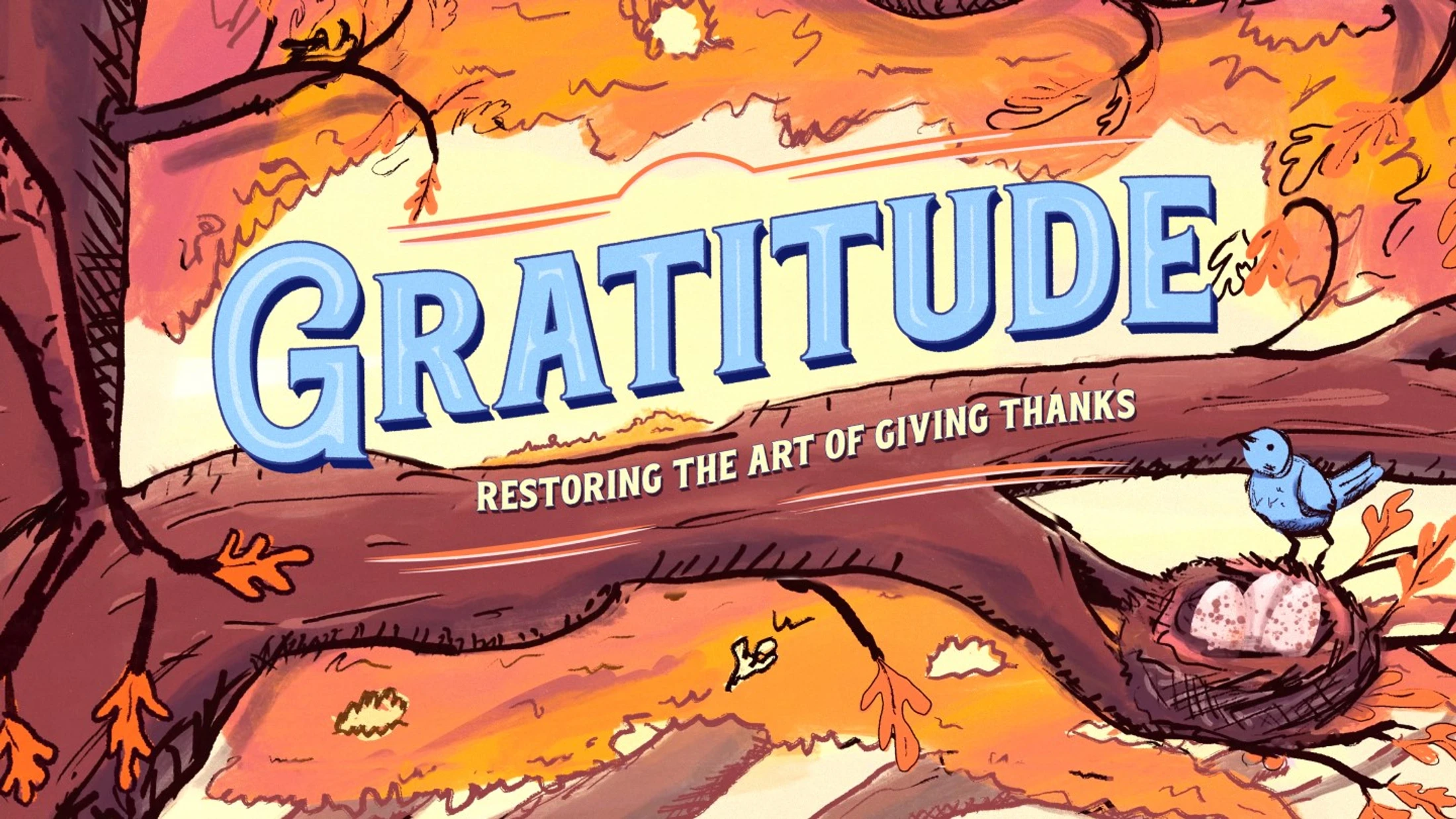
Welcome to South Sub Church. We are so glad that you've decided to worship with us today. Whether you're in the room right now or watching from home, wherever it is, we're just so glad that we get to spend this time together and worship the Lord together as one. Here at South Sub Church, we believe we are one church with two expressions of worship, but we have one mission to bring people to Jesus Christ and together become passionate followers of him. Another way that we worship is through our tithes and offerings. And here at Southsub Church, we believe that we give the Lord back what he gives us. And there's a couple ways that I want to invite you to do that this morning. One is giving online at southub.urch/give. Another way is by texting the number that's on the screen right now. Or there's an envelope in your seat back pocket. And here's what I want to invite you to do. No matter what gift you give, big or small, we believe that whatever we give, the Lord multiplies that and we are able to be the hands and feet of Jesus here where we are right now. If you're new, we invite you to fill out a connect card. We would love to get to know you, pray for you, and find a way for you to get more connected with our church. And if you're watching us online, make sure you leave a comment wherever you are. Maybe you're going to the mountains, maybe you have a soccer game to go to. Whatever it is, we're just so glad that you've decided to join us for worship. You picked a great week to be here. Let's jump into God's word together. Let's worship him today.
Come in.
Well, good morning again and welcome to the season of gratitude. Okay, do you realize this? In two weeks from today, we'll have already had Thanksgiving. We've already celebrated. But over the next two weeks, do you realize that over $100 million will be spent on turkeys? People buying turkeys in the United States of America. A little known fact that you need to know about as well, over the next two weeks, um 80 million pounds of cranberries will be sold. And to top it all off, pumpkin pie. 9 million ready-made pies will be purchased, sold, and purchased here in the United States of America. You know, we call it the season of gratitude. I think we ought to rename it. Call it the season of sweatpants. Okay? Do you know why I say that? Because in two weeks from today, when you come to church, we need to just declare it sweatpants Sunday because we will worship much easier around the waistline after eating all that turkey, all that cranberry, and all those pumpkin pies. There's been a number of people throughout the years that have had different thoughts when it comes to not sweatpants, but when it comes to gratitude. In fact, um Dietrich Bonhaofer, a well-known German theologian, said this about gratitude. He said, "It is only with gratitude that life becomes richer." Think about that for a second. We think life becomes richer when we have more money in our pocket or more things in our garage. But really the reality is it's only with gratitude that life becomes richer. Um there's a well-known sociologist and writer and author and speaker today. Her name is Bnee Brown and she says this about gratitude. I don't have to chase or extra I don't have to chase extraordinary moments to find happiness. It's right in front of me if I'm paying attention and I practice gratitude. Now, these are deep thoughts, right, by just profound individuals. But I don't want to miss one, maybe the most profound thought, maybe the individual that has the greatest wisdom, and it's Winnie the Pooh. And Winnie the Pooh said this about gratitude. I think that a heart full of gratitude is the best kind of heart. Wouldn't that be good if we all had that attitude? I think the best kind of gratitude or I think a heart full of gratitude is the best kind of heart. Now, they're not the only ones that have spoken about gratitude. Um, if you look in the scripture, scriptur is full of thankfulness and full of gratitude. In fact, if you look specifically at the psalms, of the 150 psalms written, 40 of them are directly speaking about thankfulness and gratitude. And so, this idea of gratitude is not something that the pilgrims thought of after they landed here and had their first Thanksgiving meal with the Indians. Gratitude is this concept that has been inside of us because God put it inside of us from the beginning of time. And I would think this, if God in his great wisdom made 40 of the 150 psalms about gratitude, that tells me it should be a priority in our life. And so today, I want us to look at a particular psalm, Psalms 116. And it's a psalm of gratitude. It's often called and found in this section of Psalms called the hell. And the hell is a collection of psalms, probably five or six within there that most theologians say, and they speak specifically about gratitude. And so today, we're going to take some time and just work our way through that Psalms 116. And here's what we're going to discover as we get into it. It's really a personal, intimate psalm. As you look at some of the psalms, it's very obvious that when the writer wrote them, they were writing them as a psalm of praise, a song of thanksgiving, but they were written for the multitudes. But this particular psalm, Psalm 116, was actually one that you can almost imagine the writer pulls out his pen of paper and it's something that he's writing in his own diary that he never had the idea that we would speak about it 2,000 plus years later. He never had any idea that would be contained in a book called Psalms that people for centuries would use in their own worship. But here's the reality of this particular psalm. Though it was written on a very intimate form, it did make its way into the book of Psalms. In fact, this particular one and all the ones in Hal are often spoken and said, recited and some of them even sung during special Jewish holidays. It would not have been unusual for a Jewish family during the Passover feast and the Passover celebration, they would have recited or sung Psalms 116. So, it carries this kind of balance. It's intimate yet public. And it's in that that balance of intimacy and and that public form of it that I want us to look at it together. We'll have it up on the screen. You've got a fool in your in your hand out there. But let's just s start in verse one. And here's what the psalmist says. He says, "I love the Lord because he hears my voice and my prayer for mercy. Because he bends down to listen. I will pray as long as I have breath. Did you catch those first few words in that psalm? He says, I love the Lord. The psalmist becomes so become begins so simple and so clear and his thanksgiving and his gratitude is rooted in his own personal relationship with God. That's the reason I think it's important as we read and study and dig into this particular psalms that we don't think it was some magical prescriptive public display that he was creating. It was in his own quiet time with God that he just says, "God, I love you." So simple and clear. But then he goes on to say this in those first few verses. He says, "The Lord bends down to listen." In other words, he was saying, "God, you are such an intimate figure in my life. I love you so much. I don't have to try to reach up and find you. You are bending down to where I am." And so, we can remember and we can thank God and we can have gratitude to God because he is not a God of distance. He's available God. He's a compassionate God and he's always listening. And so it's that reason that the author is expressing expressing his gratitude. But he goes on a little bit further in the next few verses and look what he says. He says, "Death wrapped its ropes around me. The terrors of the grave overtook me. I saw only trouble and sorrow. And then I called out on the name of the Lord. Please Lord, save me. How kind the Lord is. How good he is. So merciful, this God of ours, the Lord protects those of childlike faith. I was facing death, he said, and he saved me. And so now we get this idea why the author of this psalm was expressing such gratitude that he was saying, God, I love you. You saw me. You've been down. You heard me. But we understand why. Because for whatever it was, and we don't know the specific part of it, the the psalmist was going through some great tragedy, some dark season in his life. He might have been specifically going through physical death that maybe he was so sick and he was right on the edge of the death but yet God reached down and snatched him back and gave him health. Many times when a psalm psalmist writes things in scripture they will do it in a more of a literary just visual picturesque way. So maybe it wasn't physical death he was experiencing. Maybe he was going through deep relational problems. You ever been there before that you have conflict with somebody that's unresolved and it is as dark as death as you're living and walking through that conflict with that individual. So maybe that's what he was referring to. Maybe it was just emotionally. Maybe he was having one of those days, one of those weeks, one of those months where he just never wanted to get out of bed. In fact, the sun might have came up and light might have shown through his window, but the darkness in his soul was so heavy that emotionally he didn't feel like he could move forward. So whether it was relationally, emotionally, maybe financially, maybe it was physically, we don't know what specific was going on, but the author of this psalm just describes going, "It is so dark and I felt like death was grabbing hold of me. But yet God in his intimacy, God in his goodness, he reached down. He heard my cry and he rescued me from what I was going through." He goes, "For that reason, God, I'm offering up my gratitude to you." But notice what he said at the very end of that. He said, 'The Lord protects those of childlike faith. Aren't you glad the psalmist didn't write, "The Lord protects those that have walked faithfully with him for 30 plus years." He didn't say, "The Lord protects those who know scripture inside and out." He didn't say the Lord protects those who live an almost perfect but really good life. No, he said the Lord protects those of childlike faith. It was interesting in our nine o'clock service. As you know, we offer family and children's programming and student programming in our nine o'clock service. So, the service is kind of in half, right? You got this the first half we got the kids moving around. You can feel the rustling going on and then we have the time we dismiss them and the calm the service just kind of calms down a little bit. And one could mistake and think, "Oh, isn't God relaxed now in church?" I mean, now that the kids went down and the kids are going to do their thing and God's like really going to show up in this room. Here's what I often think. God probably shows up more downstairs than he does upstairs because we're a little bit more mature. We're a little bit more we got it together. We're a little bit better presenting ourselves to people. So therefore, we're in church. So God, shouldn't you don't you want to sit here with us? And I think too many times God's going, "No, I think I'll be downstairs because they're loud. They're noisy. They're messy." But they have a faith in me that maybe we don't have up here. That childlike faith. And the author of the psalm is going of the psalm is going, "God, with great gratitude, thank you that you heard me, that you reached down and not because I was good, but because of your goodness and my childlike faith." Now, as I said, it's basically the psalm is the psalmist writing a personal thank you letter. He's going, "Thank you for this. Thank you that you love me. I love you, God." And it just feels so intimate, right? But it doesn't stop there. It doesn't stop there like many of our thank yous stop. See, here's what I mean. We are in a season of gratitude and we're pausing. We've got Thursday, the Thanksgiving day, circled on the calendar, and we're all pausing and we'll probably go around the table, Thanksgiving Day, around whoever's around your table, and everybody will say why they're thankful for things. But have you ever thought about this? thankfulness. Gratitude that is nothing more than just simple thank yous out of your mouth but never has a life expressing it may be more about politeness than gratitude. Let me see if I can illustrate to you. Let let's say you got everybody at your house for Thanksgiving. You've got little ones that are coming over. It's extended family. You know there's a six-year-old little boy that's coming and you're kind of wishing he wouldn't come cuz he's the live wire, right? He's the one that's all over the place. And so you thought, you know what? I'll give him a little present that will let him some play with something. It will kind of soothe his his just overabundance of just energy. And so, right before dinner, everybody's kind of sitting in the living living room talking. And you said, "Hey, come over here, Johnny. I've got a present for you." And you've got it wrapped up, so it has some anticipation in it. And little Johnny looks at it, not expecting it. And he opens the present, and it's it's a it's a truck, a red fire truck. and he looks at it and his mom looks at him and says, "Go tell him thank you." And he walks over to you and looks you straight in the eye and says, "Thank you for the red fire truck. I really wanted a blue dump truck, but thank you for the red fire truck." And then all of a sudden his little sibling walks over and asks to hold and he looks at the sibling going, "No, this is my firet truck. This is mine. You can't have this." And all of a sudden, he just starts being that same brat that that's the reason you didn't want to invite him to the dinner in the first place. right now. Watch. Do you look at this child and think, "Ah, that's such a child of such a heart of gratitude." You're going to know he's a greedy little greedy little brat. Okay? You gave him this present. He said, "Thank you." He was polite with his words. It sounded full of thankfulness. It was sounded like a voice of gratitude, but you knew his heart and disposition didn't match what he was saying. And I wonder this, how many times have we expressed gratitude to others, but more importantly, have we expressed gratitude to God, but it was more just words and no actions behind those words? And I wonder if God looks down at us going, "It's nice of you to be to be polite, but I'm not really seeing or hearing real gratitude." And so, here's what the author does next. as he keeps writing in his psalm, he actually writes out three ways that he expresses more than with his words, but with his actions this attitude of gratitude. So look with me as we keep reading and we'll point these out. Here's what the first one, Psalms 116, and I'll start in verse 7. He says, "Let my soul be at rest again, for the Lord has been good to me. He has saved me from my death, my eyes from tears, my feet from stumbling." And so I walk in the Lord's presence as I live. Let me pause there. If you're taking notes in your Bible or on the handout, you can circle in the Lord's presence. That's the key piece that helps us understand this. He says, "And so I walk in the Lord's presence as I live here on earth. I believed in you. So I said, I am deeply troubled, Lord. In my anxiety, I cried out to you." These people are all liars. Here's what he's doing. He's showing us that sincere gratitude births intimacy with God. If you're taking notes, you can write that one in. Sincere gratitude. Sincere gratitude meaning more than just words coming out of our mouth, but it's way we live out that gratitude. Sincere gratitude births intimacy with God. You know, those first few verses we read the the phrase, the words that he said, he goes, "Lord, I love you." But he didn't stop there because he said, "And I walk in the Lord's presence." To walk in the presence of anyone is a significant or it signifies intimacy in there. To be in the presence of someone is is just considers or or resembles or or reflects closeness. I remember when my granddaughters came to visit a few weeks ago, when they first got down, one of them was sick. My little one-year-old, she was sick for a few days. you know, the red cheeks, kind of the high temperature, not enough to be too worried, but enough that she was just not feeling good. Now, I hate to admit this, but I kind of liked it. You know why? Because what happens when a one-year-old is not feeling good? What does she want or he want? Diego, would you hold me? And I held that baby and she snuggled up to me for two days. Now, when she got well, she was off wanting to go play somewhere. But while she wasn't feeling good, there was a safety that she felt when her Diego held her. There was a closeness that she felt when I held her. And guess what Diego felt? I felt an intimate little loving relationship right there. And that's exactly what the psalmist is portraying here. He said, "Listen, when I was scared, when I was in danger, when I was on death's edge for whatever reason it is, you provided me safety and you provided me security." And the psalmist says, "And I walked in your presence." And so in mine, in your life, if we are going to really exhibit sincere gratitude, more than just the words that come out of our mouth, God, I love you. God, thank you for this. What we want to exhibit with our life is this attitude, this idea, this action of coming close in intimacy with God. In fact, if you're taking notes, you can say this kind of to help summarize it. Sincere gratitude shapes how we love God. Sincere gratitude should shape how we love God. That I look back over my years of walking with Jesus, my years of living for Jesus, but more than that, my years of Jesus loving me, and it has shaped an intimacy. I've shared with y'all many times that just for me in my own walk with God. One of the crucial points every day is me getting up early and spending time with him. It's not to know more about him. It's not to study and learn more facts about him. It's for me and Jesus just to be there together. Many years ago, when I first started ministry, there was an older pastor at at the church I was serving at, and he would pray and he would always pray in his prayers, "Jesus, I just want to nestle. I just want to just nestle up next to you. I want No, you I want to snuggle up next to you. And I'll be honest, when he first prayed that, I'm thinking, dude, that's weird. Okay, like Jesus, I want to praise you. Jesus, I want to shout your name from the mountaintop. Jesus, I want to live for you. But to snuggle up to Jesus. But as I got to know this pastor, and he began to mentor me in his life, here's what I realized. He had such an intimate relationship with God. His prayers were really like snuggling up in the arms of Jesus. And it was his gratitude. It was his thankfulness that exemplified through the living out of intimacy with God. You see, sincere gratitude not only shapes how we love God, it should warm our heart.
You see, faith is much more than feelings. But if you live a lifetime of faith following Jesus and you never have any feelings towards him, you've missed a big part of the relationship. And so sincere gratitude should warm our heart. And lastly, sincere gratitude should lead us to say, "I love you." Think about your last prayer you had. Did the last prayer that you prayed to God did even in any point in there just simply reflect Jesus I love you? That's where true gratitude is exemplified in the words that we say but more than the words that we say in our intimacy that we have with God. But the psalmist doesn't stop there. Here's what he says in verse 12. He says, "What can I offer the Lord for all that he has done for me? I will lift up the cup of salvation and praise the Lord's name for saving me. I will keep my promises to the Lord in the presence of his people. If you're taking notes, you can write this for the second fill in. Sincere gratitude inspires worship of God. Sincere gratitude inspires worship of God. He says, "I will praise the Lord's name for saving me." Sometimes we might ask the question, "God, you've been so good to me. How can I pay you back?" Do you realize what a silly question that is? God, you've been so good to me. You gave me this day. You gave me the air to breathe. God, that is so good. I want to pay you back. Can I give you $10 for the air that you gave me today? God, that doesn't sound like enough, does it? Okay, God, you've been so good to me. You gave me the air to breathe that I can live my life. I'll give you a $100, God. You think you steal market value yet? Okay. $1,000, $10,000. Is there really a price tag on paying God back? No. But yet, we want to try. But there is an effort that we can make to show our gratitude in what he's given us. And here's the effort, our worship. See, all God really wants from us to pay him back is not something. It's ourselves. And worship is when we say, "God, you're worth everything in my life. God, you're worth even more than my own life. I put you up on the pedestal, God, and I worship you." Now, as we're thinking about if we really show sincere gratitude to God, you may go, "I can check that one off the box, right? because I came to church this morning and we've already sang two songs and I sang out loud with Daniel and and so I've done worship so I might not be doing too good on the intimacy factor but I did really good today on the worship factor. Here's my question for us. Did you really worship? You see worship is more than just finding some songs and the words come off our lips. The worship is generated from our heart. And so the question is, did you even really worship today to God today? Even in our service, as I think about worship, worship starts when we see God for who he is, that he's great, that he's faithful, that he's worthy of our awe. So here's a question and I hate to ask this question because it's the question I'm asking as I look in the mirror and I have to ask myself when I worship God this morning in this service and let's be let's be sure there's so many other places and times you can worship God besides in this service but we call this the worship service. So surely worship is going on in here. But was I in awe of God as I sing? You know what I find myself doing too many times during worship? The words are up there. I'm singing. And while I'm singing, I can sense someone walking in. So I look over to see who came in late. I'm looking over there to see if so and so's here. I didn't get the chance to say hi to him. So I'm trying to figure out who I want to talk to after church. Now, I do turn my phone off so I'm not checking the scores of the games. Okay, I at least I'll confess I'll do that after church. But while I'm singing, I'm also wondering what I'm going to have for lunch.
How do you think God feels in that kind of worship? Here's what's taking place. We're worshiping. We're just worshiping lots of things. We're worshiping our hunger. We're worshiping our social life. We're worshiping our curiosity and then we're sprinkling a little bit of God in there to worship him while we're doing all this other stuff. And so I think it's healthy for us in our perspective of gratitude and to ask ourselves, are we really grateful? We're really grateful not because we say thank you. We're grateful because we're trying to become more intimate with God. We're really grateful when we really seek to worship God in who he is. And so are you worshiping It's interesting as the psalmist is writing this in verse 15 and 16, he throws in these couple of sentences that honestly when I first read this this psalm, it just seems so out of place. I'm going to just kind of have one of those moments that he just went off and wrote that down. But here's what verse 15 and 16 says just kind of out of the blue. He says, "The Lord cares deeply when his loved one die." Now remember the psalmist had just talked about I felt like I was close to death but you brought me back. Okay, that's where the love comes in. That's where the care comes in. But he says the Lord cares deeply when his loved one loved ones die. Oh Lord, I am your servant. Yes, I am your servant born into your household. You have freed me from my chains. Here's what I think the psalmist is saying. It's really easy to worship God when things are going our way. It's really easy to worship God when our team is winning. When my health is good, my finances are full. That's when it's really easy to worship God. But when those things are depleted, worship still takes place. He says, "Because God still cares about me." That he's reminding himself even in his deepest, darkest moment, God still cares for him. That we worship God even in the midst of death. This past week when I was studying this, I thought of several of you here in this room that over the last year you've experienced death. Others in this room that you've experienced death of a loved one and it might have been four, five, 10 years ago that that is still there is that darkness will never go away.
Might have shared the story before my father passed away. I'll never forget before he died he had cancer and we prayed for his healing. I I remember calling people from the church, the pastor, the elders, and we anointed him just as the book of James says, and we prayed for his healing. And I left that prayer time going, "God, I believe in you. I have faith in you. You're going to heal my father." And two weeks later, the doctor told us he had two to three days to live. And I'll never forget that in that hospital when my father found out that he had two to three days to live. He looked at me and said, "Go get this is several years ago. Go get the jam box with the jam box, the radio to put CD in." And he said, "Bring my worship music."
And as my father lay on his deathbed, knowing within two to three year two to three days he would breathe his last breaths on this earth, we pushed the play and the worship music came on and my father laid in his bed and raised his hand in worship. In those days to come when I was angry, when I was frustrated at God because he could have healed my father, I visualized my father going, "God, I trust you. And even when I don't get what I want, you care, God." And he worshiped. You see, worship is putting everything I want aside and declaring God's way the right way. And so in our gratitude, we worship. Here's the third thing. The third thing, oh, I'm sorry. And sincere gratitude should shape how we praise. If you're taking notes, I've learned a long time ago if I leave blanks and don't fill them in. Some of you just go home shaking. So, I'll make sure you get all your blanks filled in here. Sincere gratitude shapes how we praise God. Sincere gratitude lifts our voice. And sincere gratitude leads us to say, "You are worthy, God.
And the third, the third and final, if you're filling in the blanks there, sincere gratitude, according to the Psalmist, cultivates generosity for God. Sincere gratitude cultivates generosity for God. Read with me in verse 17. The psalmist is going on and saying, "I offer you a sacrifice of thanksgiving and a call on the name of the Lord. I will fulfill my vows to the Lord in the presence of all his people in the house of the Lord in the heart of Jerusalem. Praise the Lord. The psalmist says, "I will offer my sacrifice." You see, a person who's always saying thank you but never shares with others is actually full of greed, not gratitude. Can I say that again? A person who's always saying thank you but never shares with others is really full of greed and not gratitude. They're not just saying thank you. They're like hold his hand. Give me more. Give me more. Give me more. They're being polite, not gratitude, not full of gratitude. True gratitude should lead us to sacrificially give back. When we are full of gratitude, God, thank you and you loaned it to me. You gave this to me, so it's yours to give back.
The psalmist also said this. He said, ' Not only will I offer a sacrifice, he goes, I'll also will fulfill my vows. So in here's what was taking place on this journey that he's on. At some point is when God, I love you. God, please take care of me. God, I'm about to die. Whatever is going on with me, would you reach out and help me? And God reached out and helped him. And he says, I promise God, I will pay you back. And he made some kind of vow to God. And so as he's writing the psalm, he's going, "Hey God, you know the vows I made to you? They're not going to be empty vows. They're not going to be foolish, empty talk. I'm going to fulfill my vows." And here's what's interesting. He's writing them down in this intimate personal journey. But he says these says these words. He says, "I will fulfill my vows in the presence of the Lord of all his people in the house of the Lord." see his private vows that he made to God, he was going to fulfill them publicly. This wasn't some kind of secret deal he God's got. He's going, "No, God, my gratitude is going to be out loud. My gratitude must be of generosity. You gave it to me. I committed. I'm going to do it. So, I'm going to generously give to you, God, what I made a vow to." Now, here's what I think is so interesting. He said, 'I will fulfill my vows in the midst of your people in your house. There's all kinds of ways that we can exhibit generosity. You can go to Starbucks and pay it for it and pay for the persons behind you. That's generosity. You you can take over a pie to the neighbor next door. That's generosity. God gives us all kinds of ways to fulfill vows of generosity. But in this specific Psalms, which is an example to us, he says,"I will fulfill my vow of generosity with your people in your house." Here's what I think he's specifically saying. He's talking about our tithes and our offerings. That when we are obedient and faithful in giving back to the church that God created, that is one of the vows of generosity that the psalmist says we need to be about.
You see, it's like this. You go to work this week and you get paid $1,000 and you get that $1,000 and you hold in your hand going, "Wow, this is so good. God, thank you so much for this $1,000. This is this will feed me. This will put a roof over my head. This will give me a car to drive. God, this is really good. Thank you." And you put in your pocket. Again, gratitude that is simply words is not gratitude. It's politeness and it can be greed. But when we get the thousand dollars going, "Wow, God, this $1,000 is awesome. It will feed me. It will put a roof over my head. It will give us a car. I can take care of my family. And God, sometimes I don't think it's enough, but you are so good, God. Let me take some." In the Old Testament, 10% and I'm going to give it back to you. That way, my lips match my pocketbook. And it's an attitude of gratitude that has the action behind it that is so much more than politeness. It is true sincere gratitude. You see, as you think about that, you can write this down. Sincere gratitude shapes how we serve God because we give back. Sincere gratitude should open up our hands. And I would add to that and our pocketbooks. Now understand that we can be generous with our time. Yes, we can be generous with our talents. Yes. But God calls us to be generous with our time, our talents, and our treasures. And that's what he was bringing to the house of the Lord. True sincere gratitude opens up our hands. True gratitude says, "Use me, God. Use my talents. Use my treasures. Use my time, but I give it back to you." Gratitude. We are entering the season of gratitude. There's a song that I'm going to ask Leela and Daniel to come back up here since we missed the choir singing today and I know we're always blessed by the choir. Um, I've asked them to sing this song and it's called Gratitude. Some of you might have heard it on the radio before. Um, but here's what I'm gonna ask you to do. As they sing this song, I want you, we're going to have the words on the screen. It's really not meant this time right now for you to sing with them. If you want to, you can, but it's really for you to listen to the words. allow the words to sink in your head and your heart because it talks about gratitude. And so Lord Jesus, we want to be more than just studying your word. We want your heart, your word to be in us and out of us. We want to be more than gracious and saying thank you and polite. We want to live a life of gratitude.
All my words fall short. I've got nothing new. How could I express
all my gratitude?
I could sing these songs as I often do, but every song must end. and you never do. So I throw my hands and praise you again.
Cuz all that I have is a hallelujah.
And I know it's not much, but I'm nothing else faith for a king except for a heart singing hallelujah.
Hallelujah.
I've got one response.
I've got just one move with my arms stretch wide. I will worship you.
Oh, I throw my hands and praise you again.
Cuz all I have is a hallelujah.
And I know it's not much, but I'm nothing at all for a king. Except for our hearts singing hallelujah.
Do you remember when I was explaining the hal this section of scripture and I made the comment that a lot of times these particular psalms would be repeated recited or sung during special Jewish holidays, the Passover. I want your mind to go back 2,000 years ago when Jesus was sitting at the table with his disciples. That was the Jewish holiday. That was the Passover. And there's a very good chance that Jesus and his disciples might have sung this particular psalm, Psalm 116. And then as they sung it and talked about God's redemption because he took care of all the the Israelites as you were going through in the Old Testament through the wilderness, God, you rescued us. We remember the blood went over the doorframe when you let us out of Egypt. You you saved us. as they read the Psalms and maybe even sung the Psalms. It had to be this this moment, I think, at the Passover meal that wasn't just kind of wrote religious monotony. It had to be the psalm that kind of just perked them up a little bit. Yes, he saved us. He rescued us. He bent down and he grabbed us. And that night that Jesus with his disciples after they went through that part of the Passover meal, that's when Jesus kind of turned things around a little bit and he brought out the communion. If you have your communion cups, if you want to go ahead and take it out now. And it was that moment that he held up the bread and said, "This is my body broken for you. And this is the the blood, the juice, the wine that represents my blood that was shed for you." And I you know that night the disciples had to be kind of scratched their head going now what? They didn't get it all. They could worship and praise and thank God and all the goodness of gratitude during the Passover portion of Psalm 116, but when it got to Jesus instituting the Lord's supper there, they just probably didn't grab hold of that as much. But oh church, we can. We can.
And I wonder how many times that we on a weekly basis take communion, but we do it more out of religious wrote than a heart of gratitude. A heart of gratitude that says, "Jesus, I love you." A heart of gratitude that says, "Jesus, I worship you." A heart of gratitude that says, "Jesus, I want to give back.
So it's with that heart of gratitude that I invite you to take communion with me that Jesus said do this to remember me to remember through gratitude. So the Bible says that night that Jesus was with his disciples that he took the bread and he broke it and he said, "Do this in remembrance of me."
In the same way he took the drink and he said, "This represents my blood that is shed for you. Do this in remembrance of me.
And before you discard your cup, I want you to hold your empty communion receptacle in your hand. It's empty.
Jesus poured all of himself out for us. He broke all of his body for us. Didn't hold any back. He gave it all. Daniel's got the second half of this song. And maybe you've heard it for the first time. I'm going to invite you to stand. And this time, if you want to sing along with him as an expression of worship, of gratitude that we throw our hands up and we say, "God, we worship you.
So come on, my soul. Don't you get shy on me. Lift up your song. You've got a lion inside of those lungs. Get up and praise alone.
So come on my soul. Don't you shine on me. Lift up your song. You got a lion inside of those arms. Get up and praise the Lord.
Come on my soul. Don't you get shy on me. Lift up your song cuz you got a light inside of those arms. Get up and praise the Lord.
Oh, come on my soul. Oh, don't you g me. Lift up your song to God ling inside of those. Get up and praise Lord.
So I throw my hands and praise you again and again. Cuz all I have is a hallelujah.
Hallelujah.
And I know it's not a much pain for a king except for a heart singing hallelujah.
Hallelujah.
Lord Jesus, thank you. Thank you for your goodness and thank you for your grace. Jesus, thank you for your life that you lived, but the life that you died, but the life that you were resurrected.
and we will commit to living a life of gratitude because of you, oh God. And we pray this in your holy name, Jesus. Amen.